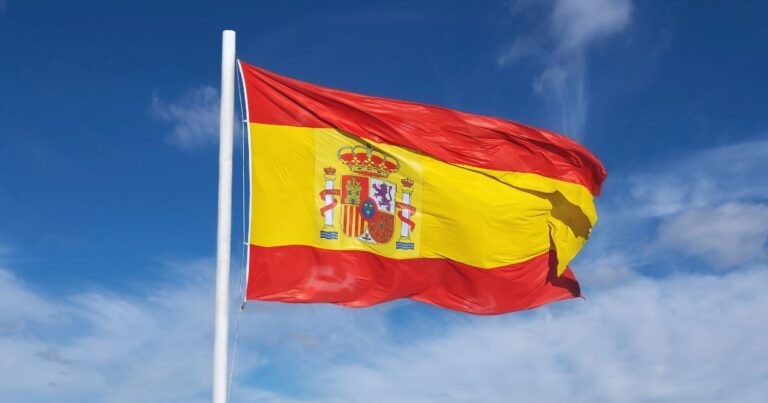
On 6 December, Spain celebrates its most important holiday, Constitution Day
This is one of the most important days in the Spanish calendar. On 6 December, the country pauses to celebrate the moment when modern…
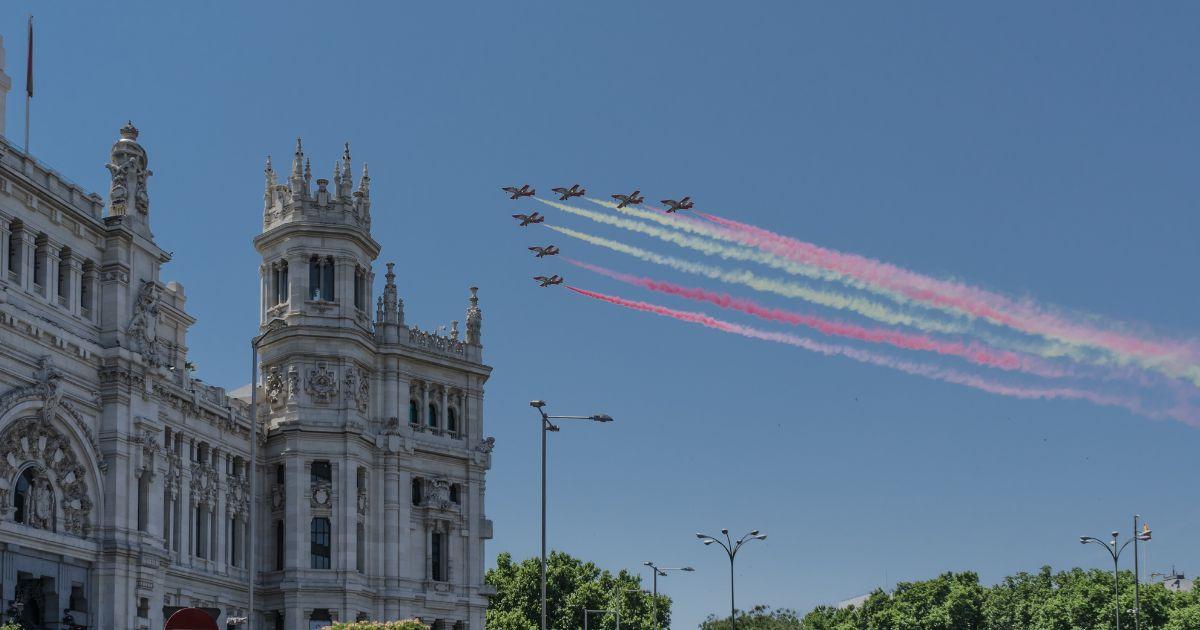
12 October marks Spain’s biggest national holiday – the Fiesta Nacional de España. It is a public holiday, the date of which commemorates the events of 1492 and Christopher Columbus’s voyage in search of a sea route to India. The grand celebrations combine state ceremonial with reflection on the country’s history; furthermore, 12 October also has an important religious significance due to the feast day of the Virgen del Pilar.
What will you read about in this note?
‘Columbus Day’ is a common term used in some countries and in texts describing the anniversary of the 1492 expedition, but in Spain the official name of the public holiday is ‘Fiesta Nacional de España’. It was established by the Act of 7 October 1987, which explicitly designates 12 October as Spain’s National Day.
The term ‘Día de la Hispanidad’ is still in use, as it featured in official regulations for many years and is still used in everyday language and in some institutional documents. Nowadays, however, it is worth distinguishing between the historical and customary name and the statutory name.
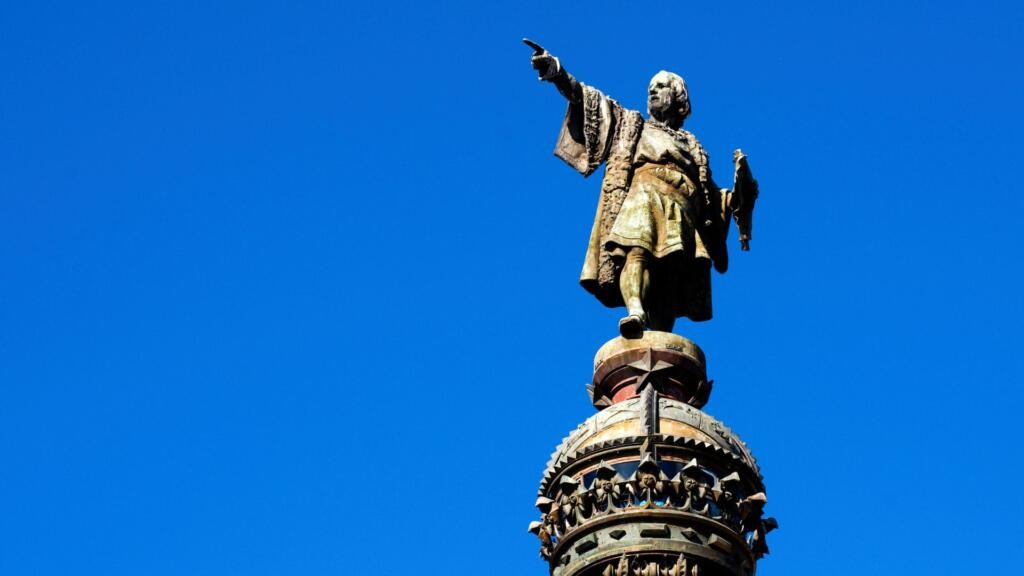
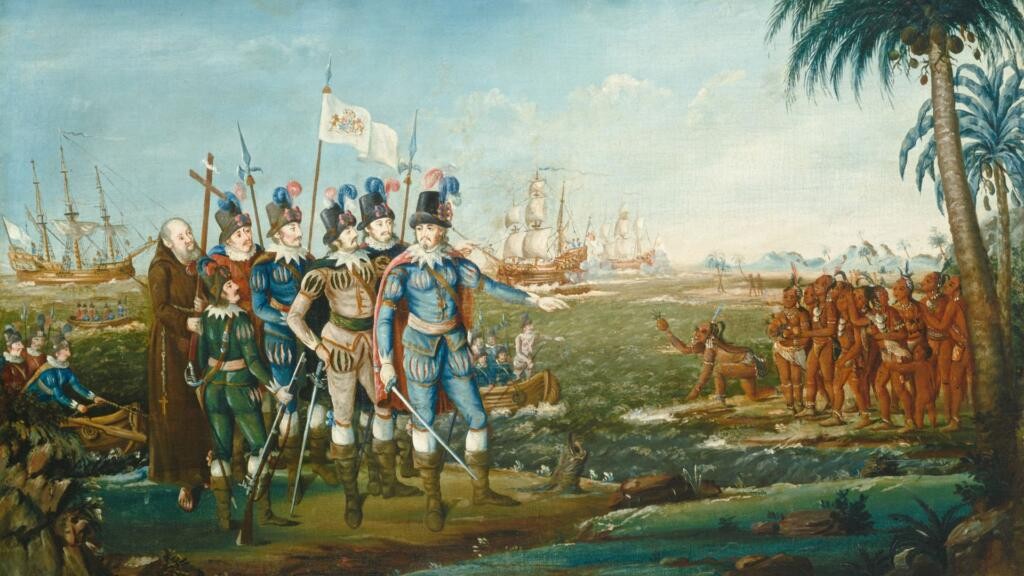
On 12 October 1492, the crew of the expedition led by Christopher Columbus, sailing under the patronage of the Catholic Monarchs – Isabella of Castile and Ferdinand of Aragon – sighted land in the Caribbean. In historical sources, the island on which the Europeans landed is referred to as Guanahaní, whilst Columbus named it San Salvador. The exact identification of the island remains a matter of debate amongst researchers, although it is known that it was situated in what is now the Bahamas.
This event marked a turning point in the history of Europe’s relations with the Americas. It sparked a series of expeditions, the expansion of European monarchies, conquests and colonisation, as well as a long-lasting exchange of people, languages, goods, plants and ideas between the continents. At the same time, the lands reached by the expedition were already inhabited by indigenous communities, which is why the term ‘discovery of the Americas’ is today often placed in quotation marks or replaced with more neutral phrases, such as ‘the arrival of Europeans in the Americas’ or ‘the beginning of lasting contact between Europe and the Americas’.
Today’s public holiday did not originally bear its current name. The first celebrations on 12 October, known as the Fiesta de la Raza Española, were organised in 1914 by the Unión Ibero-Americana. In 1918, the date was designated a national public holiday in Spain.
In the decades that followed, both the official name and the way the anniversary was interpreted changed. In 1958, 12 October was established as a national holiday under the name Día de la Hispanidad. In 1981, legislation designated this day as the Fiesta Nacional de España y Día de la Hispanidad and confirmed its status as a national public holiday.
The current legal framework is set out in Law 18/1987. The Act retained the date of 12 October, but adopted the shorter name ‘Fiesta Nacional de España’. The explanatory memorandum stated that the date symbolises the moment when Spain began its period of linguistic and cultural presence beyond the borders of Europe.
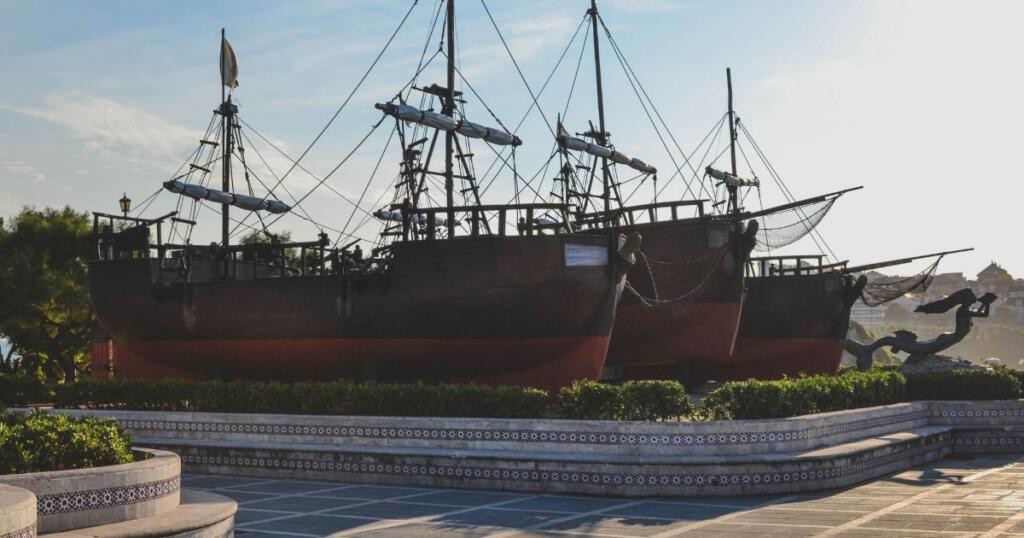
The most important national celebrations take place in Madrid and are organised with the participation of the highest state authorities, presided over by the King of Spain. The programme includes, amongst other things, a salute of honour, a ceremonial flag-raising, a tribute to the fallen, and an air and land parade featuring the Spanish armed forces and other uniformed services.
The detailed programme and route of the parade are decided on a year-by-year basis and are subject to change. It is therefore advisable to check the latest information published by the Spanish Ministry of Defence before travelling to Madrid.
The feast day of Nuestra Señora del Pilar, or Our Lady of Pilar, falls on the same day. The most spectacular celebrations take place in Zaragoza, where 12 October marks the culmination of the Fiestas del Pilar. One of the most important events is the Ofrenda de Flores – a flower procession lasting several hours, held in the Plaza del Pilar and attended by thousands of people.
However, the Virgen del Pilar is not formally the ‘patron saint of Spain’, as is sometimes stated in popular works. She is the patron saint of Zaragoza; in local tradition, she is also referred to as the patron saint of Hispanidad; and since 1913 she has been the patron saint of the Guardia Civil. The coincidence of these two feast days means that 12 October has both a national and a religious significance in Spain.
The significance of Columbus’s expedition is now viewed differently than it was just a few decades ago. For the history of Europe, it marked the beginning of a lasting connection between two parts of the world that had previously developed independently. For the indigenous communities of the Americas, however, the decades and centuries that followed meant conquest, the loss of political independence, forced labour, epidemics and profound social and cultural changes.
12 October held particular significance in 1992, as it marked the 500th anniversary of Columbus’s first voyage. In Andalusia, the most important event linked to the anniversary was the EXPO ’92 World Fair in Seville.
The exhibition ran from 20 April to 12 October 1992, and its official theme was ‘The Age of Discovery’. According to the Bureau International des Expositions, the event attracted 41.8 million visitors. EXPO ’92 was not only a historical reference to the year 1492, but also a modernisation and image-building project that left a lasting mark on Seville, particularly on the island of La Cartuja.
On the Costa del Sol, 12 October is significant primarily as a national public holiday, a day off work.
The Andalusian tourism organisation points out that, on public holidays, some museums, historic sites, shopping centres and tourist information centres remain open, but conditions and opening hours may vary. Therefore, anyone spending 12 October in Málaga, Marbella, Estepona, Mijas or other towns on the Costa del Sol should check the information directly on the relevant venue’s website.
This is one of the most important days in the Spanish calendar. On 6 December, the country pauses to celebrate the moment when modern…

Columbus Day (Spanish: Día de la Hispanidad, but also Día del Pilar) is a holiday celebrated on 12 October. It commemorates the discovery of…
The most ceremonial celebrations of the Fiesta Nacional de España take place in Madrid. The highlight is a parade featuring the Spanish armed forces, presided over by the King of Spain. The programme includes, amongst other things, a ceremonial flag-raising, a tribute to the fallen, and displays and a march-past by military units. The exact route and programme of events may vary from year to year.
On 12 October, it is also worth visiting Madrid’s museums and cultural institutions. Some of them organise special events on this day or offer free admission at specific times. However, this does not apply to all venues, so it is best to check the current programme for a specific museum before you visit.
No. In Spain, the official name of the public holiday is ‘Fiesta Nacional de España’, or Spain’s National Day. The term ‘Columbus Day’ is used colloquially or descriptively in reference to the events of 12 October 1492, but it is not the current statutory name of the Spanish national holiday.
You may also come across the name ‘Día de la Hispanidad’, which has historical roots and is still in use in everyday language. The official name, ‘Fiesta Nacional de España’, has been in use since 1987.