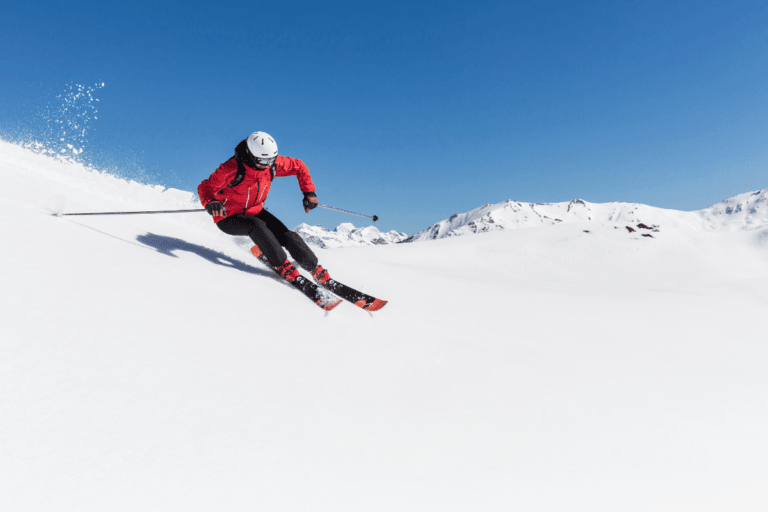
Skiing in the Sierra Nevada as early as November
The ski season in the Sierra Nevada starts as early as November. Beautiful views, perfectly groomed slopes, luxury hotels, excellent restaurants – get ready…
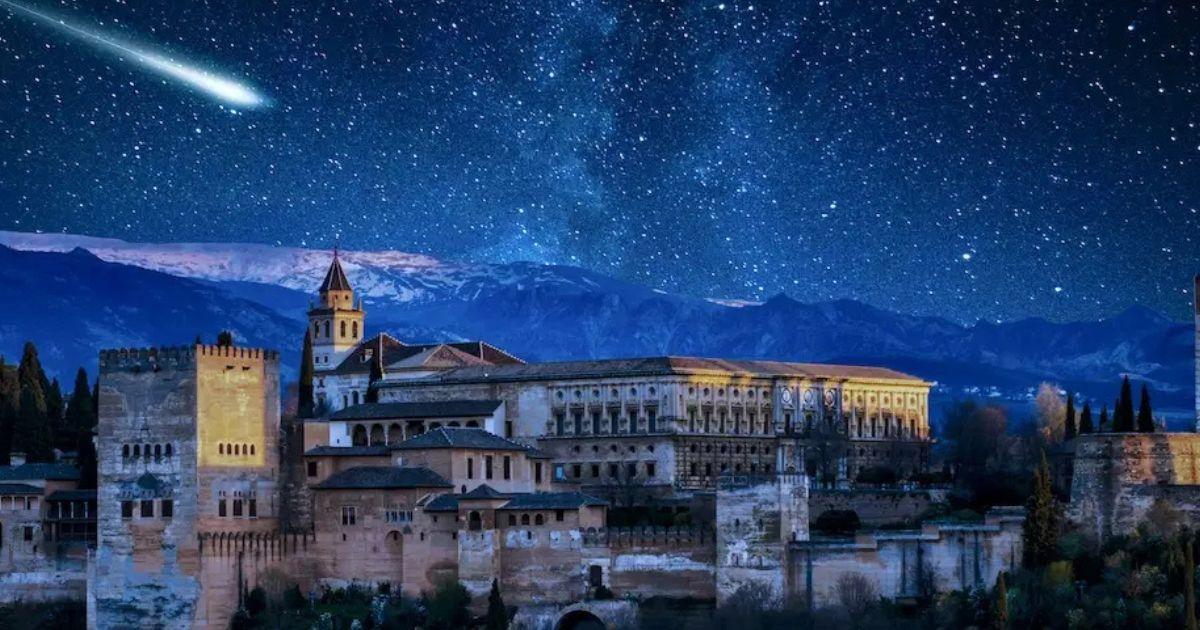
The famous ‘Tears of Saint Lawrence’ will light up the sky again this year. Special stargazing nights in the Sierra Nevada are scheduled for 11 and 12 August 2026. This is one of the major meteor showers, and the Sierra Nevada mountains in Andalusia are the perfect place to observe this magical phenomenon. Find out why the Perseid meteor shower is so special.
What will you read about in this note?
The Sierra Nevada is not only a skier’s paradise, but also one of the best places in Europe for observing meteor showers. It offers ideal conditions thanks to its altitude above sea level, low humidity and minimal light pollution.
It is a unique setting for one of nature’s most spectacular shows – meteor showers. At an altitude of nearly 3,000 metres above sea level, where Europe’s highest operational astronomical observatory is located, the night sky becomes the stage for cosmic displays.
The observatory is situated at an altitude of 2,896 metres above sea level. At this altitude, atmospheric pressure and the partial pressure of oxygen are significantly lower than at sea level. The exceptional conditions for observing meteor showers in the Sierra Nevada have contributed to the growth of astronomical tourism in the region. Observation programmes, organised by the ski resort and local astronomical organisations, attract thousands of visitors each year who wish to experience spectacular celestial displays from one of Europe’s best vantage points.
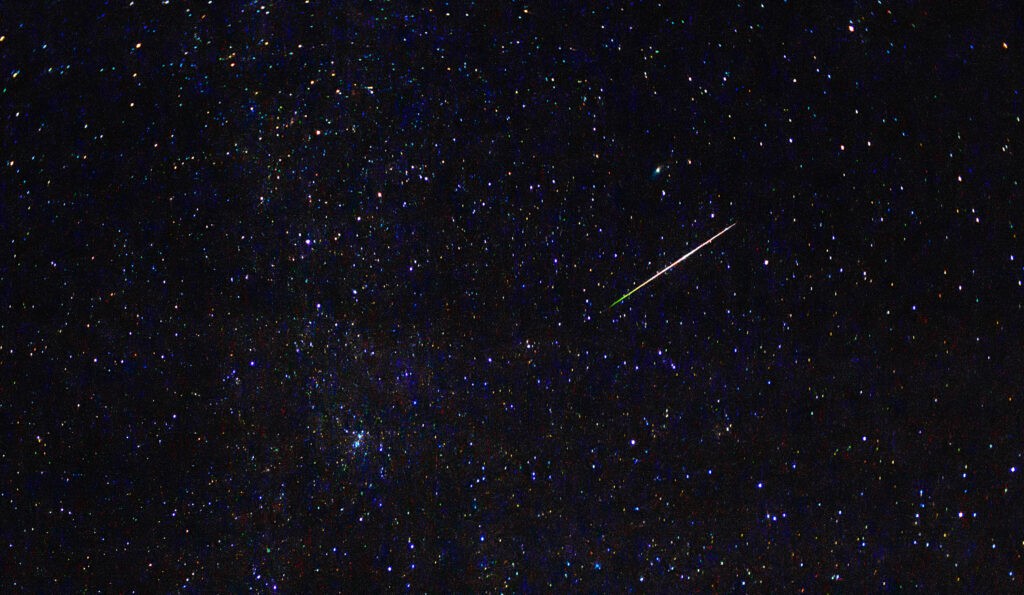
According to astronomers, the Perseids are among the most regular and popular meteor showers. They can be observed every year when the Earth passes through the stream of particles left behind by Comet 109P/Swift–Tuttle.
It is worth noting that meteors from the Perseid meteor shower have been observed in the sky for over 2,000 years. They are known as the ‘tears of Saint Lawrence’. Thus, the appearance of the meteor shower is linked to the date of his martyrdom, which took place on 10 August 258 AD.
A meteor shower is a phenomenon involving small dust particles of various sizes, which are released by comets or asteroids orbiting the Sun. A cloud of particles, known as meteoroids, is scattered along the comet’s orbit. As the Earth passes through this cloud during its orbit around the Sun, the collision between the cloud and our planet causes the dust particles to break up, giving rise to meteors.
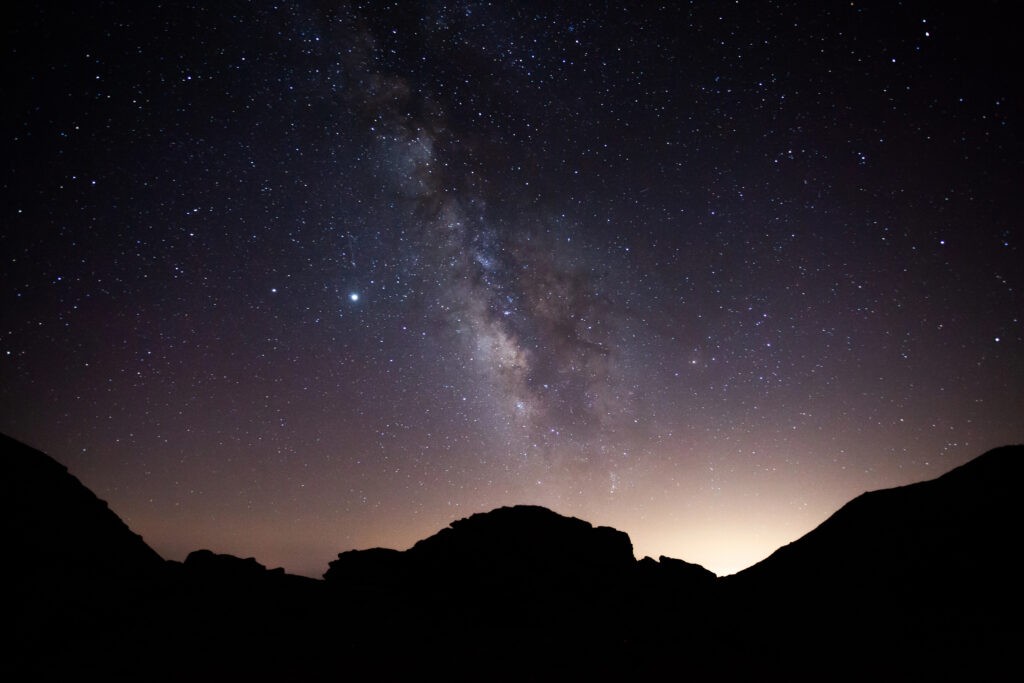
The ideal place to observe the Perseid meteor shower is the northern hemisphere, and the best time to admire it is during the second half of the night and in the early morning. At that time, the so-called radiant is high enough above the horizon. Ideal viewing conditions include clear skies, a location free from excessive artificial light, and a clear horizon.
That is why many stargazers head for areas far from towns – ideal for admiring this phenomenon. During the observation, it is worth looking towards the darkest areas of the sky – opposite to the position of the Moon. You should also bring something to lie on (a mat, blanket or towel) and warm clothing in case it gets colder during the night.
The Sierra Nevada Observatory (OSN), situated in Loma de Dílar – at an altitude of 2,896 metres above sea level – is a key site for monitoring meteors in Europe. Managed by the Instituto de Astrofísica de Andalucía (IAA-CSIC), the observatory is equipped with two main Nasmyth telescopes – with diameters of 1.5 m and 0.9 m – and an advanced meteor detection system.
Since 15 November 2009, the observatory has been operating a meteor detection station as part of the SMART project (Spectroscopy of Meteoroids in the Atmosphere by means of Robotic Technologies). The system comprises five high-sensitivity CCD cameras which monitor the airspace within a radius of approximately 500–600 kilometres, automatically detecting particles of interplanetary matter (meteoroids) colliding with the Earth’s atmosphere.
It is therefore no surprise that the Sierra Nevada mountains are one of the most highly recommended locations for observing the Perseids. This mountain range in the Baetic System of Andalusia, whose highest peak – Mulhacén (3,478 metres above sea level) – is also the highest peak on the Iberian Peninsula and in mainland Spain.
As part of the Semana Astronómica de Sierra Nevada, the ‘Noche de las Perseidas’ event will take place in Borreguiles on 11 and 12 August 2026. The Borreguiles cable car will operate on a special timetable from 9.00 pm to 1.45 am. The last ascent is scheduled for 1.15 am, and the last descent for 1.45 am.
There are two options available: the ‘Talleres Interpretativos Todo Incluido’ package, which includes an extended programme with additional services and activities, and the basic package, providing access to the event and astronomical observations. Places are limited, so the organiser recommends booking in advance. Bookings can be made on the website.
A completely different phenomenon can be observed here in winter. The Geminids, active from 4 to 17 December with their peak on 13–14 December, are one of the most fascinating meteor showers of the year. They originate from the asteroid (3200) Phaethon, which makes them unique. The Geminids are one of the few major meteor showers associated with an asteroid – (3200) Phaethon. They are characterised by an average speed of around 35 kilometres per second. Thanks to the presence of elements such as sodium and calcium, they can display a variety of colours – ranging from yellow and green to red and blue.
The Leonids, on the other hand, are active from 6 to 30 November, with the peak occurring on 17–18 November. They originate from Comet 55P/Tempel-Tuttle, known for producing some of the most spectacular meteor showers in history. They travel at a speed of around 71 kilometres per second, making them some of the fastest meteors observed. Every 133 years, as Comet Tempel-Tuttle returns to the vicinity of the Sun and Earth, the Leonids can show a significant increase in activity. During exceptionally intense Leonid storms, such as those in 1833 and 1966, an extraordinarily high number of meteors were observed, reaching, at their peak, thousands of meteors per minute.
The Sierra Nevada mountains are designated as an area with excellent sky quality. Such places are awarded Starlight certification – a designation for a new form of sustainable tourism, based on the principles set out in the ‘Declaration on the Defence of the Night Sky and the Right to Starlight’. It identifies areas conducive to stargazing and highlights their significance as an important part of the world’s natural, landscape, cultural or scientific heritage, thereby promoting so-called ‘stargazing tourism’ or astro-tourism.
There are various types of certification. A Starlight Reserve is a protected natural area where a commitment has been made to safeguard the quality of the night sky and access to starlight. Starlight Tourist Destinations, on the other hand, are places that can be visited because they offer excellent conditions for contemplating the starry sky and developing tourism activities based on this. Starlight Accommodation, on the other hand, refers to establishments offering ideal conditions for astro-tourism. Where should you go to watch the Perseids? Check out the list of Starlight Reserves designated across Spain. Many of them are located in Andalusia or in its immediate vicinity.
The ski season in the Sierra Nevada starts as early as November. Beautiful views, perfectly groomed slopes, luxury hotels, excellent restaurants – get ready…
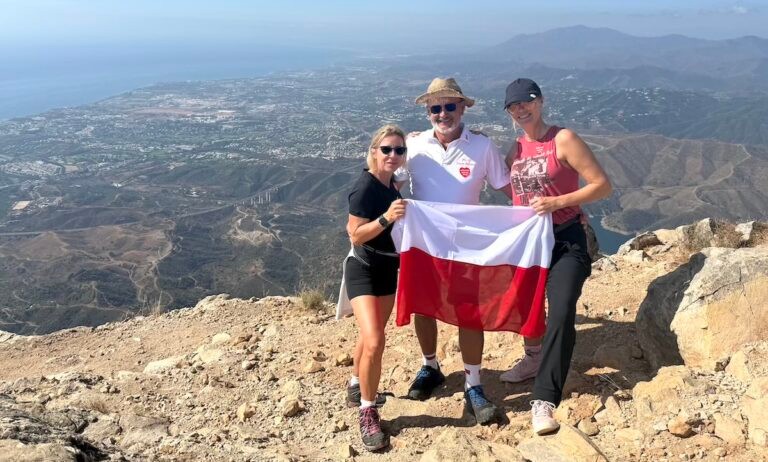
La Concha is a mountain that rises majestically above Marbella, providing it with a unique and pleasant microclimate. From the summit, you can admire…
Special viewing nights will take place on 11 and 12 August 2026 in Borreguiles. The Borreguiles cable car will operate from 9.00 pm to 1.45 am. The last ascent is scheduled for 1.15 am, and the last descent for 1.45 am. Places are limited, so it is advisable to book in advance.
It is best to choose a spot away from artificial light, with an unobstructed horizon and a clear view of the sky. You do not need a telescope to view the meteor shower. It is a good idea to bring a mat or blanket, warm clothing, and allow your eyes a few minutes to adjust to the darkness. In the mountains, night-time temperatures can be significantly lower than during the day.