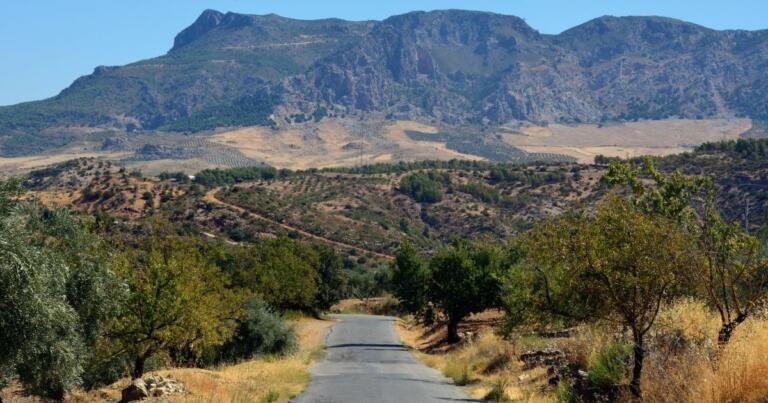
Sierra de las Nieves National Park – unspoilt wilderness 30 km from Marbella
Here, you can visit picturesque white villages, set off on mountain trails and explore the landscapes of southern Andalusia, visit a number of caves,…
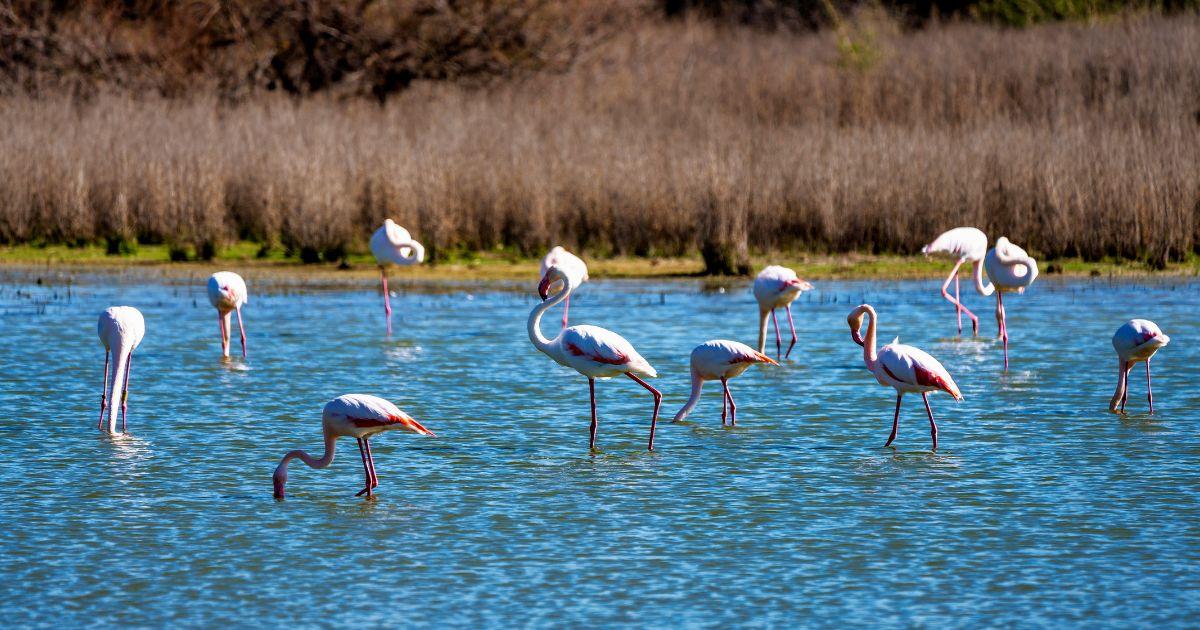
There are no palm-lined promenades, trendy beach clubs or the hustle and bustle of seaside resorts here. Instead, there is a vast expanse of salt water, silence broken only by the sounds of birds, and a pink streak that, from a distance, looks as though it has been painted onto the horizon. The Fuente de Piedra Lagoon is Andalusia’s largest inland wetland, the most important breeding colony for the greater flamingo on the Iberian Peninsula, and one of the most extraordinary day-trip destinations from the Costa del Sol.
What will you read about in this note?
Near Antequera, amongst the olive groves and cornfields, lies a landscape quite unlike that of the sunny coast. The Fuente de Piedra Lagoon is around 6 kilometres long and covers nearly 1,400 hectares. Its waters are shallow, salty and seasonal – the appearance of this place depends primarily on rainfall, which is why no two visits are exactly the same. The distance from Antequera to the visitor centre is approximately 27 kilometres.
Fuente de Piedra is famous above all for its flamingos. It is home to the largest colony of these birds on the Iberian Peninsula and one of the most important in Europe, often compared to the Camargue in France. In favourable years, the lagoon attracts tens of thousands of birds. In 2026, a record number of breeding pairs was recorded here – significantly more than the 20,000 pairs cited in older tourist guides.
The best time for birdwatching is usually in spring, particularly between March and June. This is when the flamingos pair up, build small conical nests out of mud and incubate a single egg on the islands and the remains of old salt pans. It is often most spectacular in the morning: the birds are active, the light is soft, and the pink silhouettes hovering above the water create an extraordinary natural spectacle in Andalusia.
It is worth bearing in mind, however, that Fuente de Piedra is not a zoo. The number of flamingos and the success of their breeding depend on the water level, which in turn depends on rainfall. In a wet year, the lagoon teems with life, whereas after a dry winter it can turn into an almost white, salty plain, and the birds head for other wetlands. There is therefore no guarantee that we will see a flock numbering in the thousands on every visit.
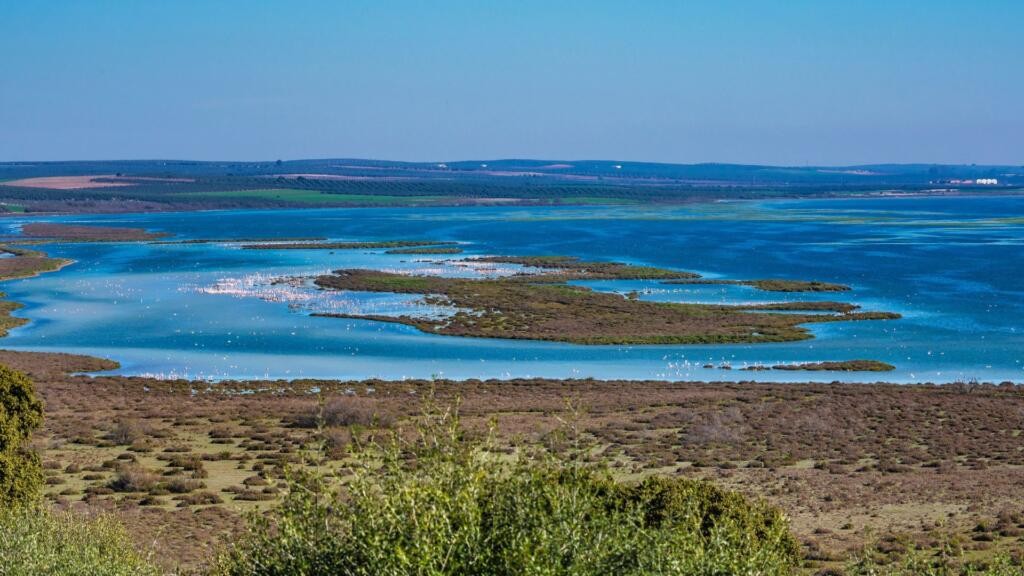
The year 2026 proved to be exceptional for the lagoon. Following heavy rainfall, the water level reached 101 centimetres in March, whereas in most years it does not exceed 50 centimetres. A total of 35,177 breeding pairs of flamingos were recorded in the reserve – the highest number since regular monitoring of the colony began in 1984 – along with around 15,500 chicks. According to the Andalusian authorities, 663 litres of rain per square metre fell there during the 2025/2026 hydrological year; this was the fourth-highest figure in the last half-century.
This excellent season followed an equally remarkable year in 2025, when over 22,700 chicks hatched – the highest number in the history of the observations. Over 33,900 pairs were also recorded at that time. Importantly, the record number of pairs in 2026 does not mean a record number of chicks – that record belongs to the previous season. These figures show just how quickly a wetland can recover when water returns after years of drought.
In 2026, two main breeding areas formed on Senra Island and in the south-western part of the lagoon. Heavy rainfall flooded some of the traditional nesting sites, but at the same time isolated others, restricting access by terrestrial predators. Lower salinity improved conditions for other species of waterbirds. Among them was the endangered marbled teal (Cerceta pardilla), which in 2026 began breeding within the saline part of the wetland for the first time.
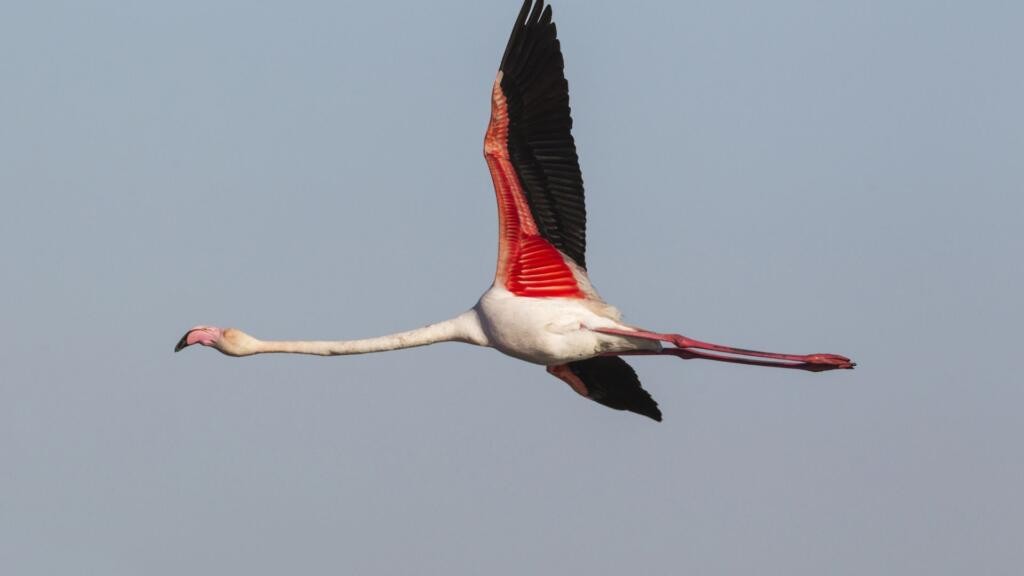
Flamingos are not born pink. The chicks have greyish-white down, and their characteristic colour develops over time thanks to the carotenoids present in their diet – including algae and small crustaceans. The colour of their feathers depends on the pigments supplied by their diet; the intensity of the pink may vary.
The way it feeds is equally remarkable. The flamingo dips its head into the water almost ‘upside down’, moves it from side to side, and uses its tongue to pump water through its beak. The lamellar structures inside the beak act as a filter: they trap tiny organisms whilst allowing water and silt to pass through. From a distance, it looks like simply dipping its beak into the water, but in reality it is a precise method of foraging.
When the adult birds fly off in search of food, the chicks gather in huge ‘nurseries’. Hundreds of grey chicks remain together under the care of some of the adults, whilst their parents travel to other wetlands in Andalusia – some as far as 200 kilometres away – in search of food. Research indicates that breeding birds make use of a network of wetlands, rather than just the lagoon itself.
Interesting fact: during their first few weeks, young flamingos are fed by their parents with what is known as ‘crop milk’ – a secretion rich in protein and fat. Both females and males can produce it. This is yet another reason why caring for the chicks is a joint task for both parents.
The Fuente de Piedra Lagoon is a closed basin. No river flows out of it – it receives water from rainfall, seasonal watercourses, surface runoff and underground inflows, and loses it primarily through evaporation. As the water level falls, the concentration of minerals increases until salt begins to crystallise on the surface.
This natural rhythm is responsible for the changing landscape. In autumn and winter, the lagoon fills with water; in spring, it usually reaches its highest level; and during the hot summer, it can dry up almost completely. That is why it is worth checking the current water level and information on bird sightings before you set off.
The lagoon is also a natural laboratory. In a study published in 2017 in *Scientific Reports*, a team from, amongst others, the University of Granada and the Doñana Biological Station analysed how drought and the presence of flamingos affect water composition and microorganisms. In a dry year, the concentrations of dissolved organic carbon, total nitrogen and total phosphorus were around 2–3 times higher than in a wet year.
Researchers have also shown that substances provided by flamingos – including those in their droppings – can stimulate the activity of microorganisms. The birds are therefore not only an attraction in the wetland, but also play a part in the processes taking place in its waters.
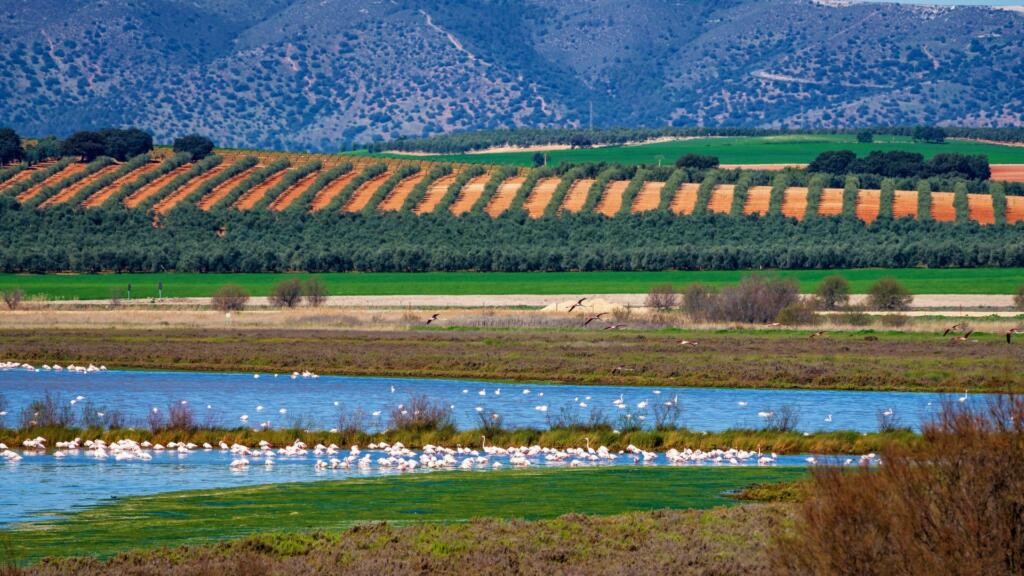
Before Fuente de Piedra became a paradise for birdwatchers, it was a salt-producing site. Salt was extracted here from Roman times right up until the mid-20th century; industrial exploitation of the lagoon came to an end in 1951. As late as the 19th century, infrastructure related to the extraction and processing of raw materials was still being expanded here.
Remnants of the old canals, walls and dykes can still be seen in the landscape. Paradoxically, the infrastructure built by humans for salt production has, over time, become an important part of the ecosystem – flamingos and other birds nest on the elevated sections of the old dykes. Traces of the past industrial activity and nature conservation intertwine here to form a single story. The area was designated as a nature reserve in 1984. Today, it forms part of the Natura 2000 network, has the status of a Special Protection Area for birds and is included on the Ramsar Convention’s list of wetlands of international importance.
Although flamingos are the symbol of Fuente de Piedra, the lagoon is not their sole domain. Over 170 species of birds have been recorded within the reserve, and the mix of species varies with the seasons and water levels. Amongst others, you can spot black-winged stilts, avocets, plovers, spoonbills, mallards, crested grebes, grebes and cranes here.
One of the most important events in the life of the reserve is the summer ringing of young flamingos. The programme began in 1986 and combines scientific research with a major public engagement initiative. Selected chicks are fitted with rings, including a plastic one bearing a code that can be read through a telescope without having to recapture the bird. In August 2026, 600 chicks were ringed with the help of over 400 participants.
This enables researchers to determine the migration routes, survival rates and return locations of individual birds. Between 1986 and 2026, a total of 21,378 juveniles were ringed, and over 167,000 ring readings were collected from 23 countries – from Guinea-Bissau to Cyprus.
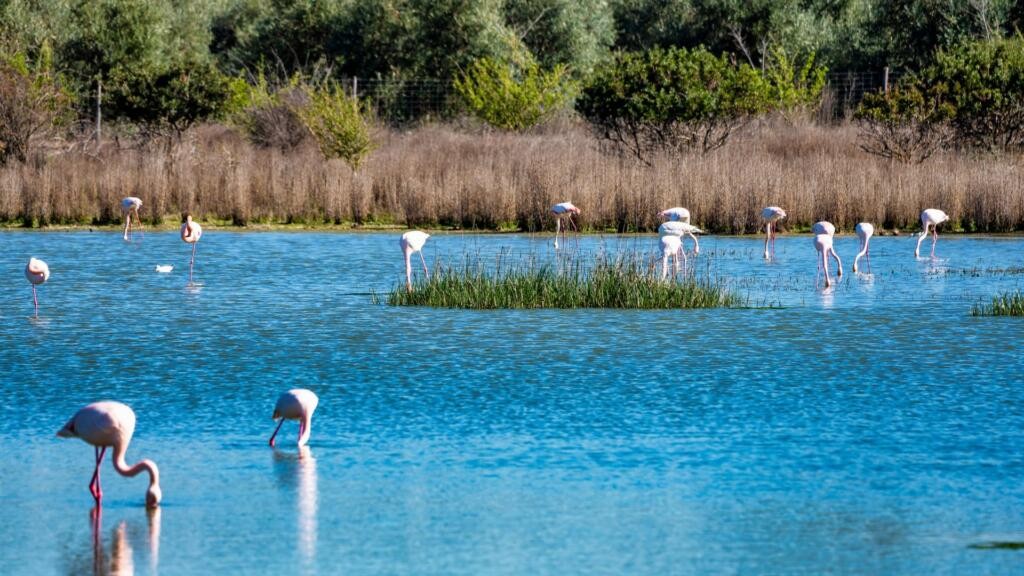
It is best to start your visit at the José Antonio Valverde Visitor Centre. At the centre, you can learn about the lagoon’s hydrological cycle, the biology of flamingos and the history of the reserve, as well as find out where in the wetlands the largest numbers of birds are currently gathered. There is a car park next to the centre, and trails leading to the observation points start nearby. Admission to the centre itself is free, whilst guided tours are a separate service.
Among the most interesting places are:
Access to the public footpaths and viewing points is free of charge, but this does not mean you are free to enter the breeding colony. There is no public path leading to the nests – the birds are viewed from a safe distance, so binoculars or a spotting scope will greatly enhance your experience.
To get there, take the A-92 motorway, exit at junction 132 for Fuente de Piedra, and then follow the local road through the town to the visitor centre. It is approximately 73 kilometres from Málaga and around 106 kilometres from Marbella, taking roughly one and a half to two hours’ drive, depending on the route and traffic. The journey from Antequera takes less time; the road to the visitor centre is about 27 kilometres long. If you don’t have a car, you can take a bus to Fuente de Piedra and then walk about 2 kilometres to the centre.
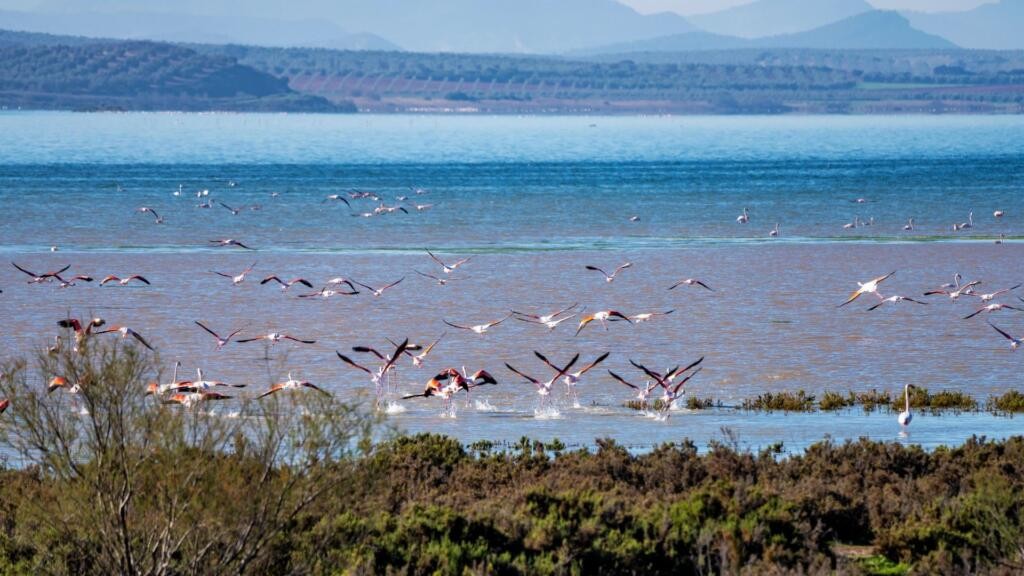
The Fuente de Piedra Lagoon does not impress with its monumental architecture or attractions designed solely for tourists. Its power lies in its vastness, the ever-changing light and the realisation that, somewhere on its vast expanse of water, one of the most significant natural spectacles in the western Mediterranean is unfolding.
From a distance, the flamingos look like a pink band stretching across the water. It is only when viewed through binoculars that thousands of individual stories are revealed: birds building nests, feeding their young, taking flight and returning, years later, to the lagoon where they themselves were born. This is a different side to Andalusia from the one seen on postcards – more austere, quiet and surprising.
Here, you can visit picturesque white villages, set off on mountain trails and explore the landscapes of southern Andalusia, visit a number of caves,…
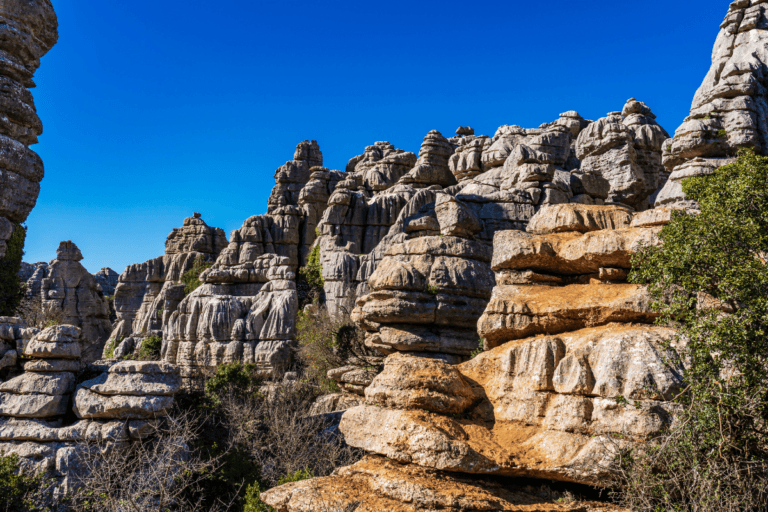
It seems impossible that you can see such a variety of landscapes in one area in Europe! We present another UNESCO-listed nature reserve -…
You’re most likely to spot the breeding colony in spring, particularly from March to June. However, the number of birds depends on rainfall and water levels. It’s worth checking the reserve’s announcements before you go.
Use of the public footpaths and observation points, as well as entry to the José Antonio Valverde Centre, is free of charge. Guided tours may incur a charge, so please check the terms and conditions with the organiser.
They are usually observed from a greater distance, from designated viewing points. Binoculars or a telescope are very useful. You should not enter the breeding areas or approach the birds.
It’s worth setting aside 2–3 hours for the visit to the lagoon alone. The journey by car from Málaga is about 73 km, and from Marbella about 106 km. If you’re planning to walk the entire Las Albinas trail or visit Antequera, set aside most of the day for the trip.