Poles have bought a record number of properties in Spain. Results for the first half of 2026
Poles are making an increasingly strong mark on the Spanish property market. In the first half of 2026, they bought 2,269 houses and flats…
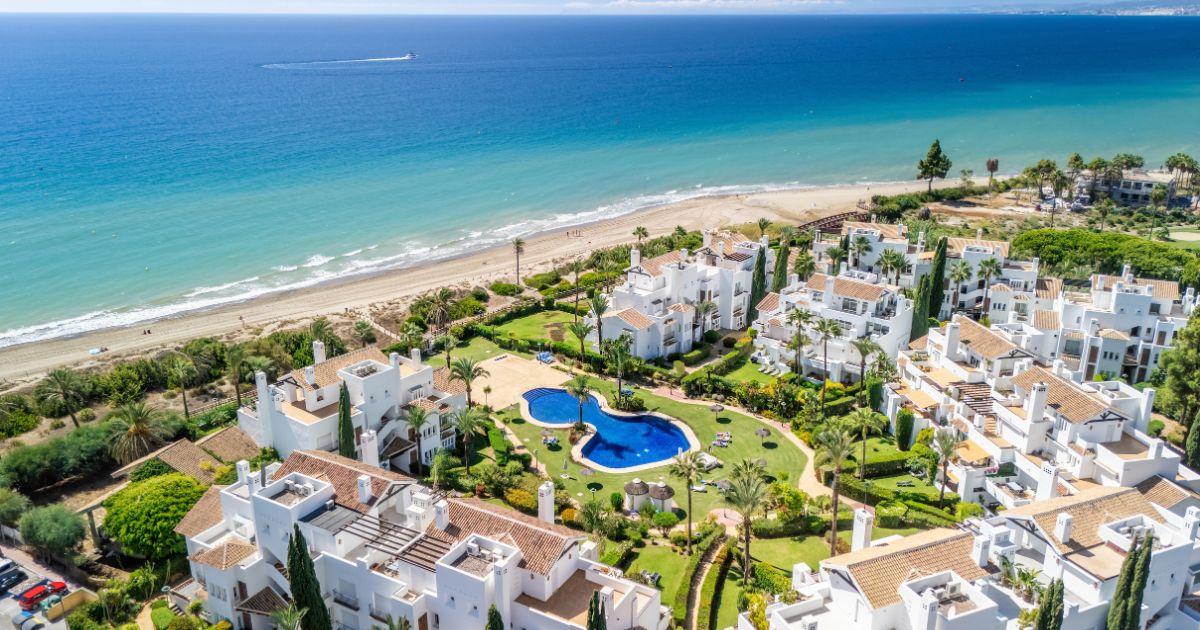
The Costa del Sol has experienced several exceptionally busy years. Following a pandemic-driven surge in demand, property prices have risen significantly, and the market for luxury homes and flats has begun to attract an increasingly diverse, international clientele from outside the Iberian Peninsula. However, data from the ‘Marbella Real Estate Market Report 2026’, compiled by Diana Morales Properties and Knight Frank, shows that in 2026 the market is entering a new phase: the number of transactions is beginning to stabilise, whilst high-quality properties in prime locations continue to command high prices.
What will you read about in this note?
The DM Properties | Knight Frank report describes the last five years as one of the strongest periods in the history of the Costa del Sol property market. Following 2020, demand picked up significantly, particularly in the luxury property segment, new developments and off-plan properties. At the same time, some of the development activity has shifted from Marbella towards Estepona, Benahavís, Fuengirola and Mijas, where it is easier to find plots of land for new projects.
Across Spain as a whole, 2025 was a very strong year: the report records 705,357 residential property transactions, which is 10.7 per cent more than the previous year and the highest figure since 2007. The average price stood at €2,284 per m², representing an increase of 9.5%. In Andalusia, 141,284 transactions were concluded, up 13.2% year-on-year, and the average price reached €1,940 per m².
According to the Colegio de Registradores, 167,934 residential property transactions were registered in Spain in the second quarter of 2026 – 5.7 per cent fewer than in the previous quarter and 2.3 per cent fewer than a year earlier. At the same time, the INE’s house price index rose by 12.2 per cent year-on-year in the same quarter. This is an important distinction: a lower number of transactions does not necessarily mean a fall in prices, particularly in markets with limited supply and strong international demand.
The most prestigious part of the Costa del Sol is the so-called Golden Triangle – Marbella, Benahavís and Estepona. In 2025, a total of 8,540 transactions were concluded in these three municipalities. Marbella accounted for 51.3 per cent of the market (4,379 sales), Estepona for 40.4 per cent (3,449) and Benahavís for 8.3 per cent (712).
Prices, however, behaved differently to sales volumes. In 2025, the average transaction price in Marbella was 4,424 euros per m² (+7.67 per cent year-on-year), in Benahavís 4,112 euros (+9.24 per cent), and in Estepona at €3,214 (+10.89%). The data for the first quarter of 2026 included in the report show a further increase in the average price in Marbella to €4,864 per m², a stabilisation in Benahavís at around €4,718, and a temporary fall in the average in Estepona to €3,384 per m².
The average for the entire municipality does not paint the full picture. In Marbella, the differences between micro-locations are enormous. According to transaction data cited in the report, in 2025 the average in Sierra Blanca stood at 5,479 euros per m², in Nueva Andalucía and Puerto Banús at around 4,287 euros, in Marbella East it was €4,076, in the centre of Marbella €4,020, and in San Pedro de Alcántara €3,915 per m².
In the premium segment, the range is even wider. The report indicates that transactions amounting to around 30,000 euros per m² have been recorded in recent years along the Golden Mile waterfront.
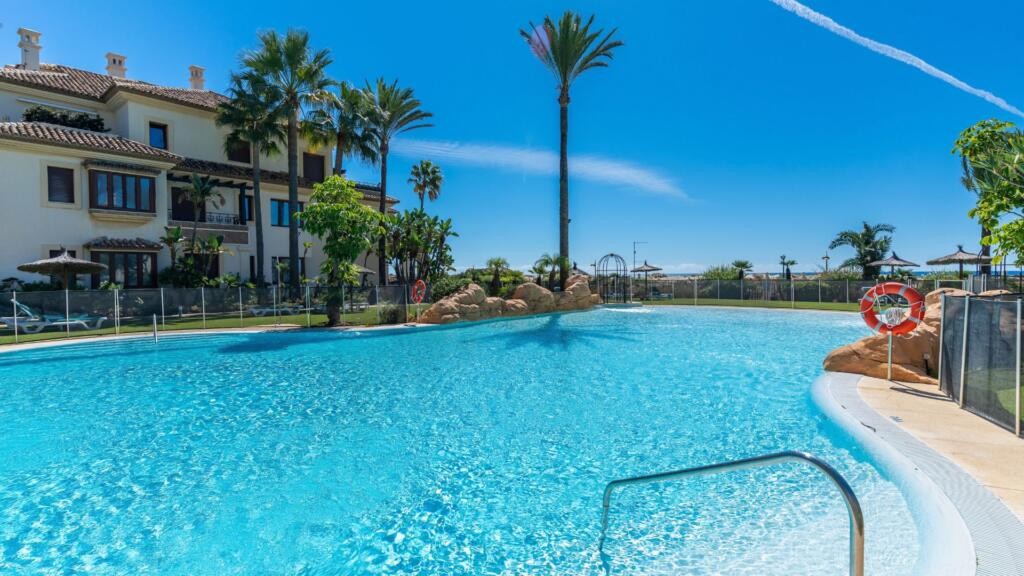
The Costa del Sol property market is considerably more international than the average property market in Spain. According to the report, in 2025, foreign buyers accounted for 62.04 per cent of transactions in Marbella, 70.84 per cent in Estepona and as much as 84.38 per cent in Benahavís. The largest groups included, amongst others, British, Dutch, Swedish, Belgian and German buyers.
Poles are now a clearly visible part of this market. In the figures for Marbella, they accounted for 6.97 per cent of foreign buyers, and in Estepona 9.66 per cent – the third-highest figure after the Dutch and the British. Across Spain as a whole, in the second quarter of 2026, Polish buyers accounted for approximately 4.33 per cent of transactions concluded by foreign buyers.
Significantly, the share of overseas buyers across Spain reached a record 15.98 per cent of all transactions in the second quarter of 2026. In the province of Málaga – which includes the Costa del Sol – this figure stood at around 37 per cent. This is one of the highest figures in the country and a strong indication that the local market remains more closely linked to international capital and the mobility of affluent buyers than to the domestic economic climate itself.
One of the report’s key findings is the growing segmentation of the market. In the mid-range and upper-end segments, buyers are increasingly rejecting prices which they feel do not reflect the quality or location. In the super-prime segment, price sensitivity remains lower, as the supply of unique properties on the Golden Mile, in Sierra Blanca or La Zagaleta is inherently limited.
DM Properties’ own data also shows the difference between asking prices and final sale prices: in 2025, this stood at an average of 13.63 per cent for villas and 11.10 per cent for flats. This is valuable information for buyers – a high asking price is not always the price at which a transaction is concluded, and a proper comparative analysis of a specific property is becoming increasingly important.
Customer expectations are also changing. The report highlights a continuing demand for space and privacy, home offices, large relaxation areas and properties ready to move into. Energy efficiency, sustainable building solutions and year-round living comfort are also becoming increasingly important, rather than properties being used solely as holiday homes.
On 18 September 2026, the town council finally approved the Plan General de Ordenación Municipal (PGOM), and the documentation for the final version was published on 24 September. This is the first PGOM in Andalusia; the plan is intended to replace the general planning framework, which until now had been based on the 1986 regulations.
For the property market, the significance of this change is primarily practical: the new document is intended to increase predictability regarding land use, infrastructure and the city’s future development. The PGOM sets out a general framework, whilst more detailed rules for urban areas will be set out in the Plan de Ordenación Urbana (POU).
The most likely scenario for the coming months is not a simple return to the growth rates seen in 2021–2023, but rather further market diversification. Properties in prime locations, which are of high quality and in limited supply, may continue to perform differently from the market as a whole. At the same time, buyers have more time to make a decision and are more likely to expect the price to be justified.
Areas that combine a lower entry threshold with new supply and improving infrastructure may be of particular interest. The report highlights, amongst others, Estepona, Bel Air, El Paraíso and Real de La Quinta.
Source: DM Properties | Knight Frank, Marbella Property Market Report 2026
Poles are making an increasingly strong mark on the Spanish property market. In the first half of 2026, they bought 2,269 houses and flats…
It is not just prices and transaction volumes that are shaping the Spanish property market today. Buyers are becoming more selective, restrictions on short-term…
In 2025, the number of transactions in Marbella fell by 8.46 per cent, whilst the average price per square metre rose by 7.67 per cent. In the first quarter of 2026, the report indicated a further increase in the average transaction price.
Yes – their share is already clearly evident in local data. According to the ‘Marbella Real Estate Market Report 2026’, Poles accounted for 6.97 per cent of foreign buyers in Marbella and 9.66 per cent in Estepona. Across Spain as a whole, in the second quarter of 2026, they accounted for approximately 4.33 per cent of purchases made by foreigners, and the number of transactions by Polish buyers was rising year on year.